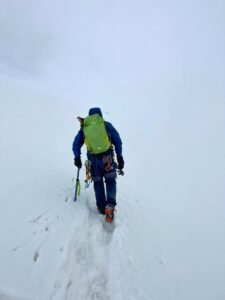
Winter mountaineering offers an exhilarating adventure, combining the thrill of climbing with the challenges of snowy and icy conditions. However, the right gear is crucial for safety and performance in such demanding environments. This guide highlights the basic winter mountaineering gear you need to tackle winter climbs with confidence.
- Ice Axe
An ice axe is a fundamental tool for winter mountaineering, used for climbing steep snow and ice slopes and for self-arresting in case of a fall. There are two main types:
- Technical Ice Axes: Designed for steep, icy climbs with a curved shaft and a sharper pick.
- General Purpose Ice Axes: Suitable for moderate terrain, with a more neutral angle.
Choose an ice axe that is comfortable to hold and fits your climbing style and terrain.
- Crampons
Crampons attach to your boots and provide traction on ice and hard snow. There are several types:
- Classic Crampons: Equipped with 10-12 points, suitable for general use.
- Technical Crampons: Feature more points and are designed for more technical ice climbing.
Ensure that your crampons are compatible with your boots and are well-adjusted for a secure fit.
- Mountaineering Boots
Winter mountaineering boots are insulated, waterproof, and designed to work with crampons. Key features include:
- Insulation: Keeps your feet warm in freezing temperatures.
- Waterproofing: Prevents moisture from seeping in.
- Stiff Sole: Provides a solid platform for crampons.
Choose boots based on the type of terrain you’ll encounter and the conditions you expect.
- Clothing Layers
Effective layering is crucial for managing body heat and moisture:
- Base Layer: Moisture-wicking materials like merino wool or synthetic fabrics that keep sweat away from your skin.
- Mid Layer: Insulating materials such as fleece or down to retain body heat.
- Outer Layer: Waterproof and windproof shell to protect against the elements. Look for breathable fabrics to avoid overheating.
Opt for materials that offer warmth without excessive bulk and that dry quickly.
- Winter Backpack
A winter backpack should be durable and have enough capacity to carry all your gear. Features to look for include:
- Ski or Ice Axe Attachments: To secure your ice axe or skis.
- Hydration Sleeve: To prevent water from freezing.
- Compression Straps: To stabilize the load.
Choose a backpack that suits the length of your trips and the type of terrain.
- Headlamp
Winter mountaineering often involves early starts or late finishes, making a reliable headlamp essential. Key considerations:
- Brightness: Measured in lumens; a higher number means a brighter light.
- Battery Life: Ensure it lasts for the duration of your climb.
- Weather Resistance: It should withstand snow and moisture.
Consider carrying extra batteries in cold conditions, as they can drain faster.
- Avalanche Safety Gear
In avalanche-prone areas, safety gear is critical:
- Avalanche Beacon: For locating buried climbers in case of an avalanche.
- Avalanche Probe: For pinpointing the location of a victim.
- Avalanche Shovel: For digging out a victim or clearing snow.
Familiarize yourself with how to use each piece of gear and consider taking an avalanche safety course.
- Gloves and Mittens
Warm, waterproof gloves or mittens are essential to protect your hands from frostbite and cold. Options include:
- Inner Gloves: Lightweight, moisture-wicking gloves for dexterity.
- Outer Mittens: Insulated and waterproof for warmth.
Layering your handwear allows for flexibility in varying conditions.
- Gaiters
Gaiters cover your lower legs and keep snow and ice from entering your boots. They also provide additional warmth and protection from the elements.
Conclusion
Winter mountaineering demands respect for the elements and preparation with the right gear. From ice axes to avalanche safety equipment, each item plays a crucial role in ensuring a safe and successful climb. Equip yourself with high-quality gear, and always prioritize safety by staying informed about weather conditions and terrain. Happy climbing!
By investing in proper winter mountaineering gear and preparing thoroughly, you’ll be well-equipped to face the challenges of winter’s rugged beauty.